
Why Software in Climate Matters
Thoughts on building a thesis for Earth 🌎 🟤

Hardware, and atoms-based solutions will be the main driver in tackling the climate emergency. This has been made abundantly clear by a number of trends - the capital flows into solar and wind generation to power our economies, the roll-out of distributed batteries to manage this new generation, or the funding into engineered and nature-based carbon removal to offset our ever-increasing global emissions.
Beyond this, there are also the as-yet unproven solutions to come - novel types of carbon removal & sequestration for removing latent atmospheric carbon, much-needed developments in water capture, treatment and storage to tackle growing shortages, all sorts of physical solutions to climate adaptation (from building energy efficiency to flood defences), and the ever-closer revolutionary potential of nuclear fusion.
Within this, it can often be hard to see the opportunity for software in what is fundamentally an atoms, not bits, based problem.
Yet software is a core pillar within the climate space. Much as our whole lives have become software-driven, from ride-hailing to financial management, e-commerce, social networks, or data storage, the climate tech landscape cannot help but be defined by, and experienced through, a digital world.
As Climate Papa’s excellent article noted back in 2023, “Software can be the product, output the product, deploy the product, enable the product, or design the product. To give some analogies to current industries: Airtable or Slack are the product themselves. Stripe’s software enables payment actions via API. Airbnb’s software powers their marketplace for vacation homes.”
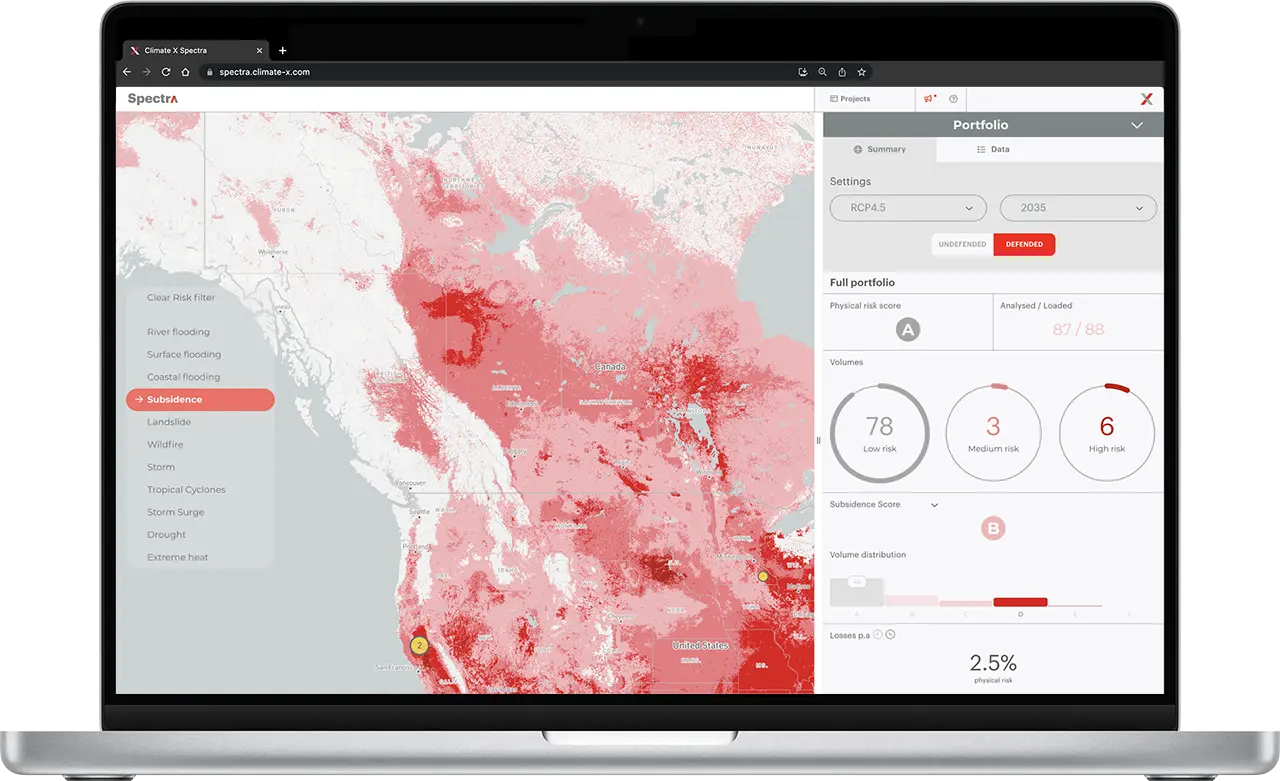
Looking at this through a climate lens, software will power grid and home energy management processes, optimise large-scale supply chain management, feed satellite imagery through machine learning models to predict climate risks, provide novel tools and products for infrastructure financing and optimise building retrofits for environmental standards and cost efficiency.
At Earth we come from software - having founded and scaled software businesses, including Taulia and Centrifuge as unicorns, operated within and advised many others, and invested in +140 more as angels. As such, we get it - how to build software, how to fund it, how to hire for it, and how to sell it to organisations - all the way from SMBs to global corporations.
Given this, we feel we have an unfair right to play in this space, and focus our efforts on the founders building category-defining, software-driven companies across the wider climate landscape. This all said, we are not scared of hardware - and do recognise the need for hardware enablement, or commoditized products/devices to go with software solutions, as long as the software provides the backbone for the offering.
Here’s a list of climate businesses (including those developing net-positive solutions for society that are not strictly “climate”) that are software-first or software with enabling hardware.
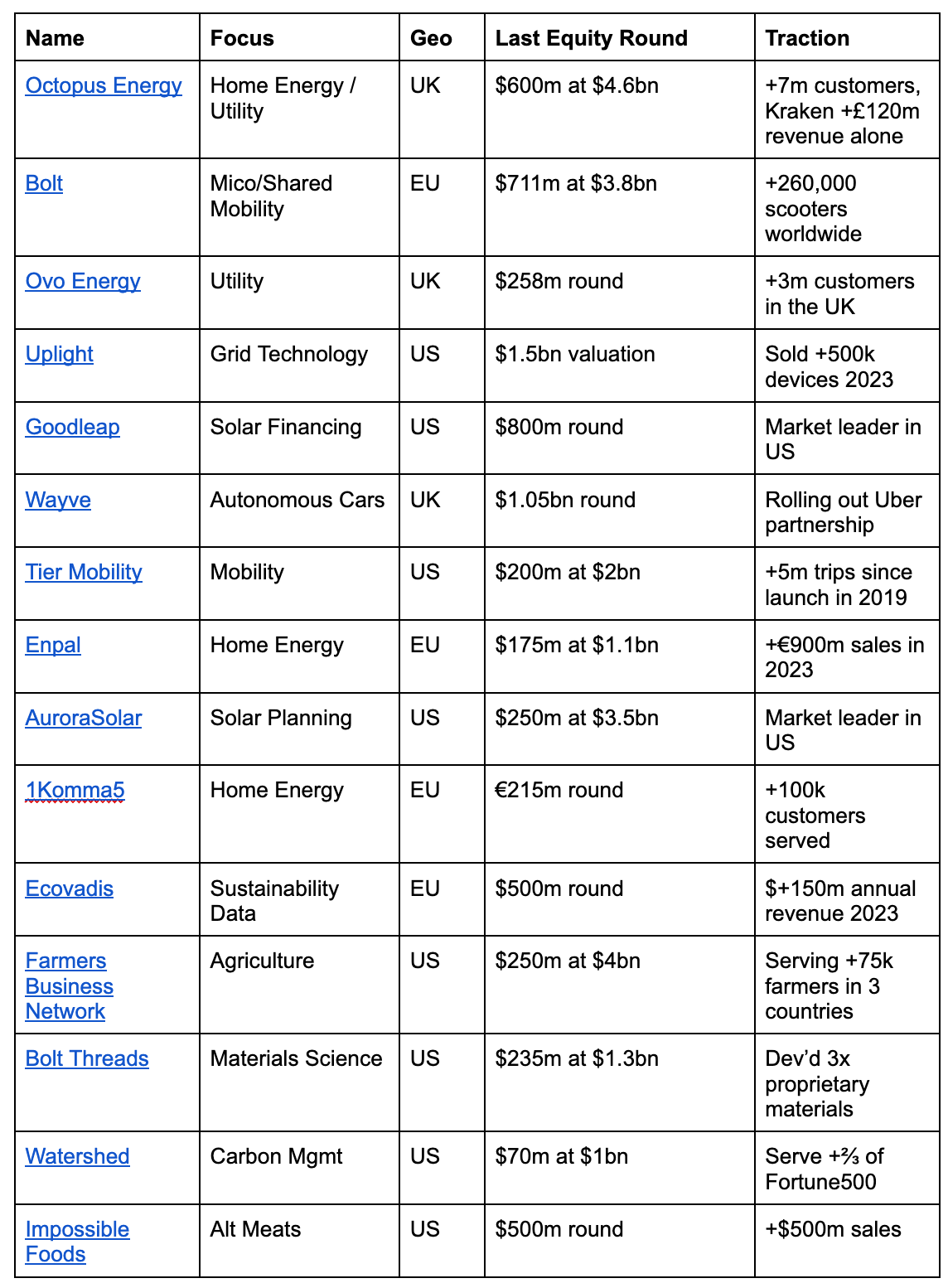
The notable “unicorns” in this space have raised +$7bn in their most recent rounds alone at a +$30bn combined valuation (as of Oct’24), across everything from b2b e-commerce, to home energy management, micro-mobility, new materials and grid management software (clickable links here):
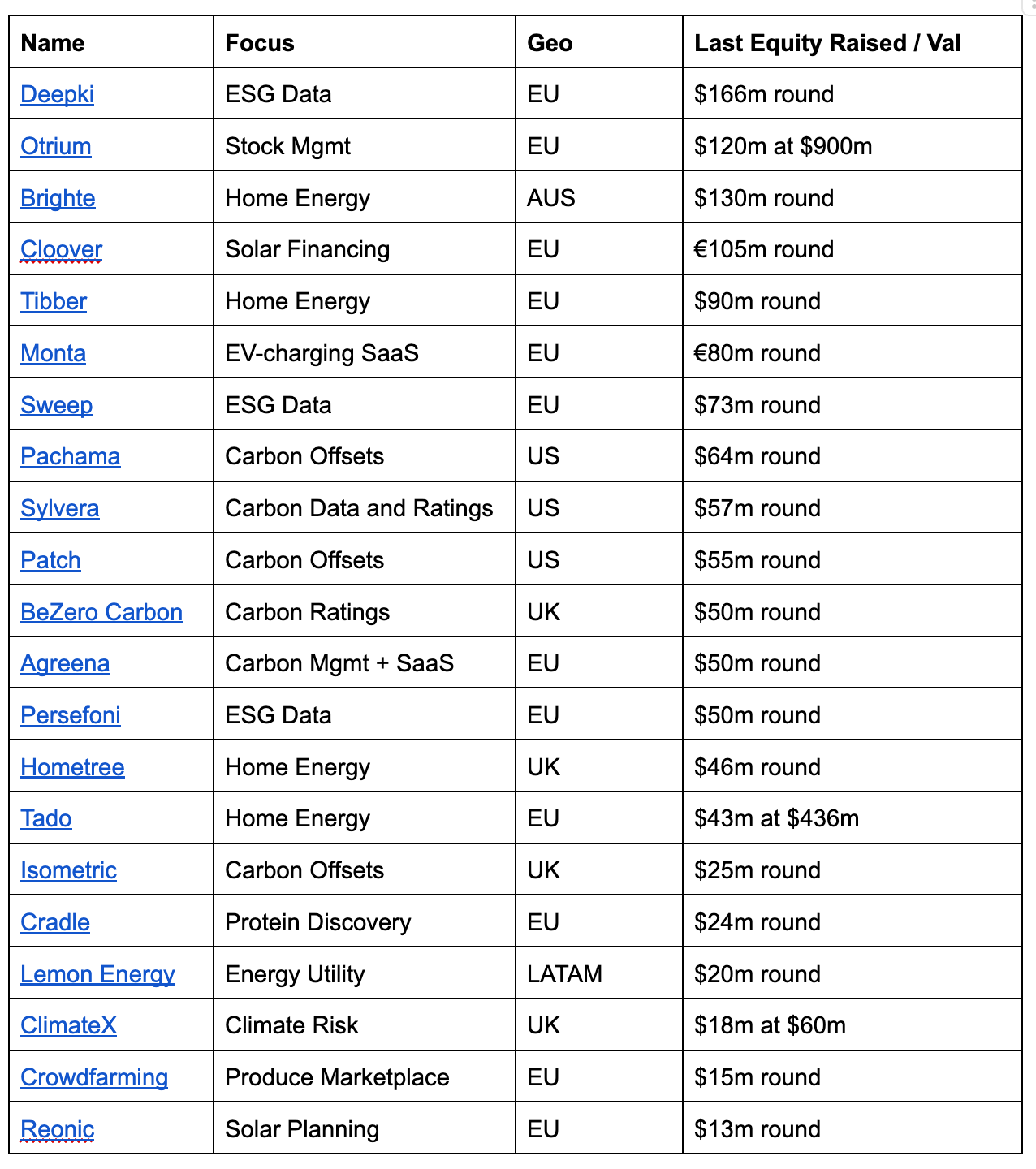
Supported by a very strong cohort of “soonicorns” coming through the pipeline, having raised ~$1.3bn in the past 24 months, with a strong predominance in Europe:
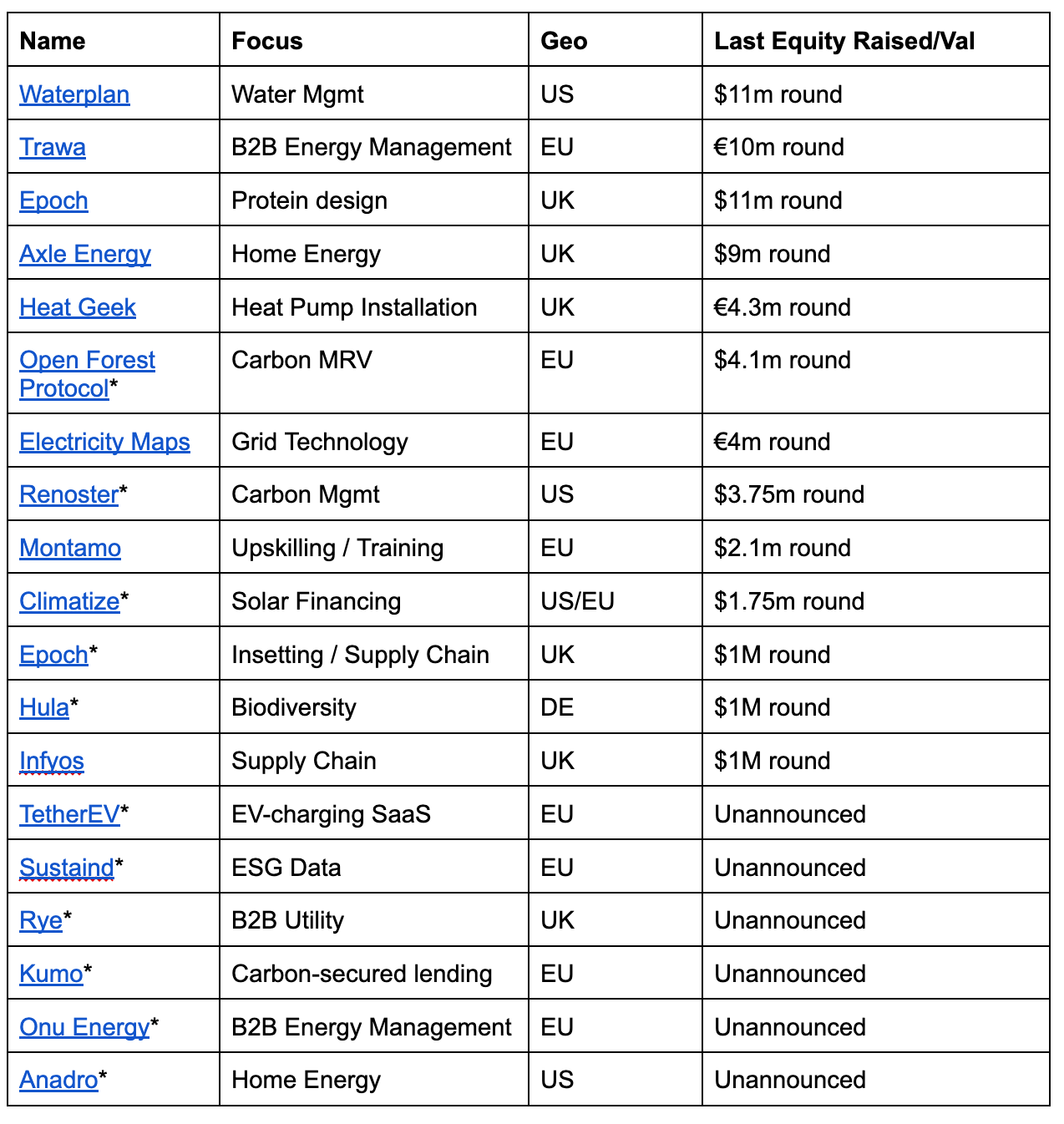
And lastly, early-stage businesses, some from the Earth angel portfolio (*asterisked), that we view as potential future stars:
This piece is the beginning of a longer series on climate software, building a thesis at Earth, and areas we think are going to be majorly impactful in the next decade. Watch this space for more, and drop me an email at max@withearth.xyz with any thoughts.